Probate Clearance London: Recycling and Sustainability Commitment
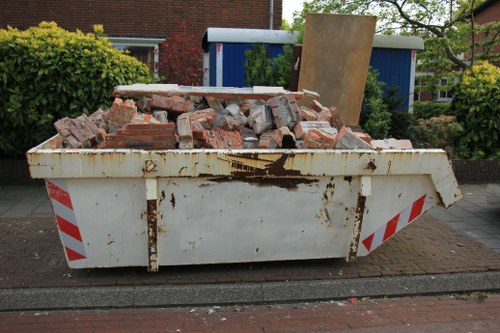 At Probate Clearance London we place environmental responsibility at the core of our probate clearance and estate services. Our London probate clearance teams work to divert as much material as possible from landfill, aiming for a recycling percentage target of 85% across typical clearances within two years of service launch. This target applies to household goods, furniture, electricals and garden waste recovered during clearances and is part of our wider citywide sustainability plan.
Our probate clearance in London approach recognises the complexity of waste streams in the capital: different boroughs apply different schemes for dry mixed recycling, food waste and garden waste collections, and we tailor our sorting processes accordingly. We collaborate with local authorities to follow borough-level rules — many areas separate food waste, require glass and plastic in mixed recycling, or offer specific bulky item collections — and we align our internal sorting so that items are prepared for the correct municipal or private recycling route.
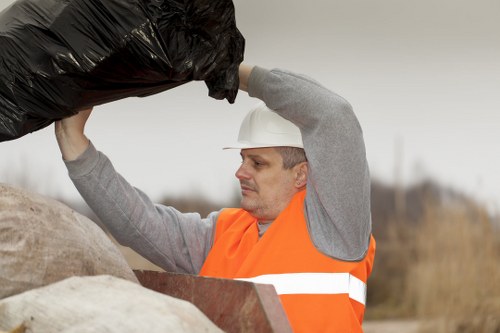 In practice, London probate clearance teams operate detailed on-site segregation: textiles, metals, wood, paper and WEEE (Waste Electrical and Electronic Equipment) are separated at source where possible. We actively reduce contamination of recycling streams by removing food residues and insulating materials from items before they leave the property, which increases the likelihood of successful recycling at transfer facilities.
We use a combination of municipal and private facilities for processing. Our network of local transfer stations includes borough transfer hubs and licensed facilities across north, south and east London; for example, teams regularly route sorted loads to transfer stations servicing Enfield and Haringey, the south London handling hubs and the east London materials recovery sites. These stations speed up onward recycling and recovery and help maintain traceability for different material types.
 Partnerships form a central pillar of our sustainability model. Probate Clearance London partners with reputable local charities and redistributors to give items a second life: working with community reuse centres, homelessness charities and national organisations such as the British Heart Foundation and Shelter to redistribute clean, usable furniture, clothing and household items. When items cannot be reused, we prioritise recycling routes that recover energy or materials rather than sending goods to landfill.
Beyond donations we contract with specialist recyclers for items that need specific processing: WEEE is shipped to accredited electronic recyclers, textiles to certified reprocessors, and bulky timber or metal is processed through dedicated recovery lines. These partnerships are audited regularly to ensure materials are managed in accordance with the Environment Agency and local authority standards for London estate clearance projects.
Our operational fleet reflects our low-carbon commitment. We are transitioning to low-emission and electric vans across the Probate Clearance London fleet, with a growing number of low-carbon vans and hybrids used for collection and transport. Route optimisation software reduces mileage and idle time, and telematics monitor driver behaviour to minimise fuel use and emissions during estate clearances and probate removals.
 Sustainability also extends to procurement and reuse: when replacements are needed for removal equipment or packing materials we choose recycled or sustainably sourced options, and our teams reuse protective materials where safe to do so. We encourage executors and estate managers to consider reused items and donation as the first option, stressing that reuse is the highest-value outcome for social and environmental reasons.
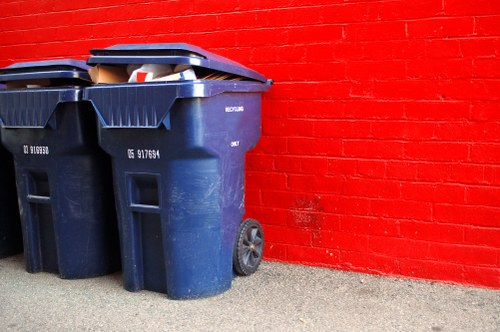 Transparency is important: we provide clear reporting on diversion rates, donation outcomes and recycling destinations for London probate clearance projects. Our monthly internal targets and public sustainability statements show progress toward that 85% recycling objective, identify bottlenecks at transfer stations, and highlight how borough-specific waste separation practices influence results. By combining targeted on-site sorting, strategic partnerships with charities and recyclers, and a low-emission fleet, Probate Clearance London demonstrates a practical and accountable approach to estate clearance sustainability.
How we measure success
Measurement is at the heart of continuous improvement for probate clearances in London. We track the percentage of material diverted from landfill, tonnes of reused items donated to charities, and reductions in vehicle CO2e from our electric and hybrid vans. Quarterly reviews compare performance across boroughs and clearance types, so that our probate clearance services for London continually refine sorting practices and logistical routing.
Our ethical and environmental promise
Probate Clearance London commits to a clear, ethical recycling policy: prioritise reuse, donate suitable items to community partners, and recycle residual materials through accredited routes. Our teams are trained in both the technical aspects of sorting for borough-specific collection systems and the softer skills of liaising with charity partners to ensure dignified and effective redistribution. With a focus on improvement and openness, we aim to be a model for sustainable probate and estate clearance across the city.
- Recycling percentage target: 85% diversion from landfill.
- Local transfer stations: coordinated use of borough hubs and licensed materials recovery facilities.
- Partnerships with charities: reuse-first approach with accredited local and national partners.
- Low-carbon vans: electrification and route optimisation to cut emissions.
- Adaptability: aligning processes with borough waste separation rules to maximise recycling outcomes.
By integrating these elements, Probate Clearance London delivers estate clearance solutions that are both practical and environmentally responsible, reducing waste, supporting local communities, and lowering carbon impacts across every stage of the clearance lifecycle.